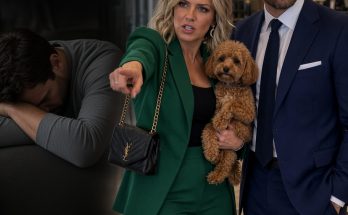
I thought I understood why my daughter-in-law was acting strangely after wrecking my car. Then I asked her one simple question about the accident, and my son answered for her. His response only left me with more questions.
When my daughter-in-law called to tell me she’d crashed my car, my first thought was that at least she was okay.
That relief didn’t last long.
I babysit my two grandkids, Sophie and Ben, several times a week so my son Mark and his wife Rachel don’t have to pay for childcare.
I don’t mind.
I retired three years ago. The kids are six and four, and having them around gives my week a rhythm I didn’t realize I’d miss after leaving work.
Mark has always hated needing help.
Even as a teenager, he’d rather spend an hour figuring something out than ask me how to do it.
I used to joke that he was the one child I never had to worry about.
So when Rachel came to pick up the kids one afternoon and asked to borrow my car “for 20 minutes,” I didn’t think twice.
“I just need to run to the grocery store.”
Her car was apparently with Mark.
I handed her my keys.
An hour later, my phone rang.
My car had been in an accident.
Thankfully, Rachel was fine.
My car wasn’t.
The entire front was smashed.
When I got there, Rachel was standing beside it with her arms folded tightly across her chest.
“Rachel, what happened?”
She barely looked at me.
“That’s what insurance is for.”
I couldn’t believe how casually she said it.
There wasn’t even an apology.
I was angry, but she looked shaken, so I swallowed most of what I wanted to say.
A few days later, my insurance company called.
That was when something stopped making sense.
The accident hadn’t happened anywhere near the grocery store.
It happened almost 40 minutes from my house.
When I asked Rachel about it, she said she’d decided to go somewhere else afterward.
“Where?”
She hesitated.
“Just another store.”
That answer bothered me.
Then, while cleaning my belongings out of the car before it went to the repair shop, I found a parking receipt under the passenger seat.
It was from a shopping center just a few blocks from where she’d crashed.
It was time-stamped less than 20 minutes before the accident.
I stared at it.
Rachel hadn’t made an extra stop after buying groceries.
She had lied about where she was going from the beginning.
That evening, I confronted her.
“Why were you 40 minutes away from my house if you were going to the grocery store?”
Rachel went completely silent.
Mark looked at her.
Then at me.
“Mom, you’ve got this all wrong.”
“Then explain it.”
“Just leave it alone, Mom.”
That made me angrier.
“She borrowed my car.”
“I know.”
“She lied about where she was going.”
“I know.”
“Then why am I the only person who seems bothered by this?”
Mark rubbed his forehead. “She told me the trip had something to do with our finances. That’s all I know.”
Rachel looked at him.
“Mark.”
“I’m not telling her our business.”
He looked back at me.
“There’s more going on than you understand.”
“Then help me understand.”
Neither of them would.
I left.
By then, I couldn’t stop wondering what Rachel had been doing across town while I was home taking care of her children.
The next day, I got the final estimate.
Insurance would cover most of the repairs, but I was responsible for a $2,000 deductible.
I went to their house and showed Rachel the paperwork.
“I’m not asking you to buy me a new car. I’m asking you to cover what your accident is going to cost me.”
Rachel’s face went pale.
Before she could answer, Mark stepped between us.
“Mom, you had no right to ask Rachel to pay for it.”
I actually thought I’d misheard him.
“What?”
“You heard me.”
“I’ve been watching your children for free three days a week. Rachel borrowed my car, lied about where she was going, and brought it back wrecked. And I have no right to ask?”
“That’s not what I mean.”
“Then what do you mean?”
He couldn’t answer.
Rachel stared at the floor.
That hurt almost more than the money.
Mark had always been thoughtful.
Responsible.
The son who returned a borrowed car with more gas than it had when he took it.
Now he was standing in front of me, making me feel greedy for not wanting to lose $2,000 because of something his wife had done.
I folded the estimate.
“Fine.”
“Mom.”
“No. You clearly don’t want me asking questions.”
I left without arguing.
A few days later, I stopped by their house to drop off Sophie’s jacket.
The front door was unlocked, so I stepped inside.
Then I heard Rachel arguing with someone in the kitchen.
A man.
“You were driving,” Rachel hissed. “You said you’d pay me back.”
I stopped in the hallway.
My heart started pounding.
“Keep your voice down,” Rachel said. “Mark can’t find out.”
I quietly pulled out my phone and texted my son.
“Mark, I need to tell you something. Come home. Now.”
I was about to slip outside when I heard Rachel behind me.
“Carol?”
I turned.
Rachel stood in the doorway.
A man I vaguely recognized was behind her.
She looked at my phone.
Then at me.
Her face collapsed.
“I think it’s time we told you what’s going on.”
The man stepped forward.
“I’m Luke.”
It took me a second.
Then I remembered him.
Rachel’s older brother.
I’d met him once at Sophie’s first birthday.
I looked from him to Rachel.
Then I remembered what I’d overheard.
I looked at Luke.
“You were driving?”
He nodded.
“Yes.”
Rachel closed her eyes.
I couldn’t believe it.
“You let me think you crashed it?”
“I was going to tell you.”
“When?”
“I don’t know.”
“That’s not an answer.”
Luke stepped in.
“It was my fault. Rachel was upset. I told her I’d drive her home.”
“Upset about what?”
Neither spoke.
Then I understood.
“The shopping center.”
Rachel nodded.
“You weren’t shopping.”
“No.”
“What were you doing?”
She sat down.
“Borrowing money.”
That wasn’t the answer I’d expected.
“From Luke?”
“Yes.”
“Why?”
Rachel looked at me.
“We’re in trouble, Carol.”
The room went very quiet.
“What kind of trouble?”
“Money.”
She told me Mark had lost a major source of income four months earlier.
Not his job.
Enough of his income that their budget no longer worked.
At first they’d used savings.
Then the savings disappeared.
They’d fallen behind on bills.
Nothing dramatic enough to announce.
Just one thing after another until every paycheck was already spent before it arrived.
“Why didn’t Mark tell me?”
“He was embarrassed.”
“And you?”
Rachel laughed once, but there was no humor in it.
“You watch our children three days a week for nothing. How was I supposed to come to you and say we needed money too?”
I thought about every morning she’d arrived with the kids.
Every thank-you.
Every time I’d told her it was no trouble.
“You could have told me.”
“I know.”
“Instead you lied and took my car.”
“I know.”
Luke spoke.
“She called me because she didn’t know what else to do.”
He’d agreed to lend them enough to get through the next few bills.
They met at the shopping center because Rachel didn’t want Mark knowing she’d asked her brother.
Afterward, she’d cried.
Luke offered to drive.
Then he had crashed into a curb.
“Why did you tell everyone you were driving?”
Rachel stared at her hands.
“Because I’d already lied about where I was going, and I panicked. Admitting Luke was driving meant explaining why he was there in the first place. He said he’d pay whatever your insurance didn’t.”
Luke nodded.
“I will.”
I looked at Rachel.
“And ‘that’s what insurance is for’?”
Her eyes filled.
“That was awful.”
“Yes.”
“I was terrified you’d keep asking questions.”
“So you acted like I was ridiculous for caring about my own car?”
Rachel looked down.
“I thought if I acted like there was nothing to explain, you’d stop asking me to explain it.”
“So you made me feel like I was the problem.”
“I know. I’m sorry.”
Before I could answer, the front door opened.
Mark walked in.
He saw me.
Then Luke.
His face changed.
“What is he doing here?”
Rachel stood.
“Mark.”
“What did you do?”
That surprised me.
He wasn’t looking at Luke.
He was looking at Rachel.
“I asked him for help,” she said.
Mark went still.
“You what?”
“Carol knows.”
“Knows what?”
“Everything.”
I held up a hand.
“Not everything.”
I pointed at Luke.
“Did you know he was driving my car?”
Mark stared at him.
“What?”
That answered my question.
Rachel started crying.
Mark looked from her to Luke.
“You let him drive Mom’s car?”
“I was upset.”
“And then you told me you crashed it?”
“I didn’t know what else to do.”
Mark turned away.
For the first time, I realized he hadn’t been protecting some secret affair or even Luke.
He’d been protecting something else.
“Mark.”
He didn’t look at me.
“Why did you tell me I had no right to ask Rachel for the deductible?”
His jaw tightened.
“Mom.”
“No. I want an answer.”
Rachel wiped her face.
“Tell her.”
He looked at his wife.
“Rachel.”
“Tell her why.”
Something in her voice changed him.
His shoulders dropped.
Finally, he said, “Because we didn’t have it.”
I stared at him.
“The $2,000?”
He nodded.
“You could have told me that.”
“I know.”
“Instead, you made me feel horrible for asking?”
“I know.”
“Why?”
He didn’t answer.
I stepped closer.
“Mark, why couldn’t you tell me you were struggling?”
He laughed once.
It sounded broken.
“Because I’m the one you never have to worry about.”
I stopped breathing for a second.
“What?”
He finally looked at me.
“You’ve been saying it my whole life.”
I knew immediately what he meant.
I’d said it proudly.
At family dinners.
At his graduation.
When he bought his first house.
When relatives complained about their grown children.
“Mark’s the one I never have to worry about.”
I had always thought it meant capable.
Dependable.
Strong.
“I meant that as a compliment.”
“I know.”
“Then why would it stop you from telling me?”
He looked down. “Because after someone’s proud of you for being the one who never needs help long enough, needing help starts feeling like disappointing them.”
Nobody spoke.
I thought about Mark at 16 refusing to call me when his car broke down.
Mark at 23 working two jobs without telling me.
Mark insisting he could handle the down payment on his house himself.
Things I’d always filed under independence.
Suddenly they looked different.
Rachel spoke quietly.
“He kept saying he’d fix it.”
Mark shook his head.
“Don’t.”
“No. She needs to know.”
Rachel looked at me.
“He stopped buying lunch at work. He told me he wasn’t hungry.”
My stomach tightened.
“He’d come home and eat whatever the kids left on their plates.”
“Rachel.”
“I found out he’d pawned his watch.”
I looked at Mark’s wrist.
Bare.
The watch had belonged to his grandfather.
I’d given it to Mark when he turned 30.
“You sold Grandpa’s watch?”
His face flushed.
“I was going to buy it back.”
Something inside me cracked.
“You sold that before you called me?”
“I didn’t want your money.”
“I didn’t want you hungry.”
“I’m not hungry.”
Rachel gave him a look.
He stopped.
I understood then that the car wasn’t the real reason I’d been shut out.
Neither was the deductible.
My son had been drowning a few miles away while I proudly told everyone he was the one person who never needed rescuing.
But that didn’t erase what he’d done.
“Needing help wasn’t the betrayal.”
Mark looked at me.
“Making me feel selfish for asking you to take responsibility because you were too ashamed to tell me you needed help was.”
His eyes dropped.
“You’re right.”
Rachel started to speak.
I stopped her.
“And you don’t get to lie to me, let someone else drive my car, then act like the damage doesn’t matter because you’re embarrassed.”
“I know.”
Luke cleared his throat.
“The deductible is mine.”
We looked at him.
“I was driving. I’ll pay it.”
Rachel shook her head.
“You don’t have to do all of it.”
“Yes, I do.”
For once, nobody argued.
I didn’t offer to pay their bills.
I didn’t write a check.
And I didn’t pretend everything was fine because we’d finally told the truth.
I told Mark and Rachel I loved them, but our arrangement had to change.
“I love Sophie and Ben. I will always be their grandmother. But I’m not going to be the part of your budget nobody has to discuss.”
Mark winced.
I continued.
“If you need me to babysit, ask me. If you need help, ask me. Don’t build your life around me quietly absorbing whatever you can’t carry.”
Mark nodded.
Rachel did too.
For the next month, they arranged other childcare twice a week.
I still had the kids on Fridays.
Luke paid the deductible in installments.
My car came back from the repair shop.
Rachel apologized again when she saw it.
This time, she didn’t explain.
She just said, “I treated something that belonged to you like your loss mattered less than my fear. I’m sorry.”
That apology I could accept.
Mark took longer.
He and Rachel reorganized things.
He picked up extra work, but not enough to stop sleeping.
Rachel increased her hours.
They asked for help before emergencies became secrets.
One Friday, Mark came to pick up the kids.
As Sophie put on her shoes, I noticed something on his wrist.
His grandfather’s watch.
I stared.
Mark looked down.
“Rachel found the pawn ticket.”
“You got it back?”
He nodded.
“Eventually.”
I touched the worn leather strap.
For years, I’d thought strength meant raising a son who didn’t need me.
I was beginning to understand I’d gotten that wrong.
Three months after the accident, my phone rang.
Mark.
“Everything okay?”
He hesitated.
That old question had come out automatically.
“Actually, Mom, I need help.”
I gripped the phone.
Every instinct in me wanted to say yes before he finished.
Instead, I asked, “What do you need?”
He told me.
It wasn’t dramatic.
He needed me to pick up Sophie the following afternoon because Rachel had a late shift and he couldn’t leave work.
“I know Friday is usually your day,” he said. “And if you can’t, we’ll figure something else out.”