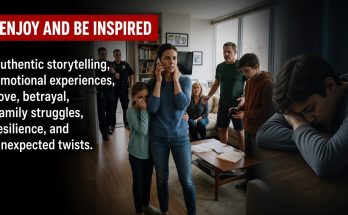
My father sent one last text from the front row at my MIT graduation, and the vibration against my thigh felt less like a notification and more like the final period at the end of a very long sentence. I did not pull the phone out immediately because the processional was still moving row by row toward the stage, and protocol demanded a certain posture of reverence that the administration took terribly seriously. My rented regalia felt stiff against my throat, the wool collar scratching at skin that had spent too many nights under the harsh fluorescent tubes of the basement labs where the C7 protocol had slowly taken shape over four relentless years.
Around me, thousands of people milled in the June humidity, their laughter and applause blending into a dull roar that echoed off the limestone facade of the great hall. I kept my eyes fixed on the back of the head of the guy in front of me, a petroleum engineering major whose parents had flown in on a private charter from Houston, while my thumb slid quietly into my pocket to press the glass screen awake.
The message sat there in crisp white text against the dark background, brief and heavy with the particular brand of condescension that had defined every family dinner, every holiday phone call, and every school break since I was fourteen years old. Don’t count on me for anything after today. You’re on your own. He had typed it while sitting in a folding chair that I had personally paid for, under a white canvas canopy that I had reserved, using a hotel confirmation code that had been billed directly to my debit card three weeks prior.
He thought he was cutting the cord, severing the financial lifeline of a son he considered a perpetual disappointment, a kid who had traded a safe corporate track in his father’s industrial supply firm for abstract theoretical systems that Arthur Vance considered worthless academic daydreaming. For four years, every time I mentioned the encryption architecture or the defense infrastructure models, he would lean back in his leather desk chair, swirl his scotch, and ask when I was going to learn how to sell something people could actually touch. He loved the word leverage, using it to describe how he kept suppliers under contract and how he kept his children feeling small enough to manage.
I remembered the winter of my junior year when the server farm in Building 42 had crashed at three in the morning, wiping out six weeks of parallel processing data right before the Department of Defense evaluation.
I had called home, desperate for a short-term bridge loan of five thousand dollars to lease emergency redundant cloud nodes while the local hardware was being rebuilt. My father had listened to the explanation for perhaps thirty seconds before interrupting to lecture me on fiscal discipline and the folly of biting off more than I could chew. He told me that if I spent less time playing with toy computers and more time studying actual balance sheets, I wouldn’t find myself begging for handouts in the middle of the night. He had refused the wire transfer, forcing me to liquidate my old car and sleep under my desk for four straight days until the code compiled itself clean and the first small municipal contract came through. That was his definition of character building, a phrase he used whenever he wanted to excuse his own refusal to invest a single dime in my future unless it came with a signed guarantee of corporate servitude.
My mother had sat quietly beside him during those phone calls, her voice small and thin through the receiver, murmuring something about how father knew best and how I should just try to listen and keep my head down. She had flown out with him for the graduation weekend, wearing a muted floral dress that looked like it had been bought off a clearance rack in a suburban department store to match her invisibility. When I met them at the baggage claim at Logan on Thursday afternoon, her first words to me were not congratulations on the degree or inquiries about my health, but a anxious whisper about whether the rental car insurance was fully covered. She looked older than her fifty-eight years, her shoulders permanently hunched as though bracing for an invisible blow that might come from either her husband or the world at large. I had put their bags in the trunk of the gray sedan, walked them to their hotel room in Cambridge, and paid the bill in full, knowing that this would be the very last transaction I would ever execute on their behalf.
The irony of funding their trip to witness my public excommunication was not lost on me, but I had learned long ago that the best way to handle a man like Arthur Vance was to let him walk directly into the trap he had designed for someone else.
The line shifted forward again, the heavy velvet ropes parting as the graduates filed toward the wooden steps leading up to the dais where the university president and the faculty senate sat in full academic regalia. The sun cut through the high windows of the auditorium, casting long golden slats across the sea of black caps and gowns, illuminating dust motes that danced in the stagnant air. I could see them clearly from where I stood, sitting in the very front row of the parent section, right where my money had placed them. My father was leaning back with his arms crossed over his chest, his jaw set in that familiar expression of weary indulgence that he reserved for events where he was forced to pretend an interest in anything that did not directly generate profit margins. He had his phone out again, likely checking the stock futures or drafting an email to his regional sales managers about quarterly targets, entirely unaware that the entire trajectory of his world was about to pivot on a axis he could not even see.
The C7 protocol had not been an accident, nor was it the kind of speculative classroom exercise that my father assumed I spent my days dabbling in. Over the past twenty-four months, while the rest of my cohort had been interviewing with consulting firms and software startups in Silicon Valley, I had been working under a classified university tech-transfer agreement that had quietly attracted the attention of federal defense contractors and critical infrastructure titans. The system was deceptively simple in its architecture: a decentralized, self-healing encryption lattice designed to protect municipal water grids and power distribution networks from synchronized state-sponsored cyberattacks. It was the kind of technology that governments spent billions trying to secure, and the kind of breakthrough that universities rarely saw outside of multi-year national laboratory initiatives. The Office of Technology Licensing had spent the last three months vetting every line of code, verifying the patent assignments, and finalizing an acquisition and deployment deal with a consortium of federal agencies and enterprise giants totaling forty-eight million dollars.
My name was on every single page as the sole creator and principal architect. The university administration had kept the details under a strict embargo, waiting for the exact moment of the spring commencement ceremony to make the public announcement, a tradition they reserved for once-in-a-decade breakthroughs that elevated the institution’s standing among global research universities. Only the dean of engineering and the university president knew the full extent of the valuation, and they had kept the cream-colored folder containing the binding execution documents locked in the university safe until this exact morning. I had been briefed on the timeline three days prior, sitting in the dean’s wood-paneled office while he slid the agreement across the polished walnut table and asked if I wanted to make any adjustments before the public disclosure. I had looked at the signature line, where my initials were stamped in neat blue ink, and told him that no adjustments were necessary, and that the timing couldn’t be better.
Now, as the student ahead of me stepped up to shake the president’s hand and receive his empty cardboard diploma tube, the dean stepped away from his seat and walked slowly toward the center of the podium, his hand resting on the corner of the wooden lectern. The auditorium slowly quieted down, the rustling of programs and the murmurs of proud parents fading into a respectful hush as the microphone hummed to life. The dean was an old man with white hair and a voice like dry parchment, someone who had seen thousands of young men and women pass across this stage to take their places in law firms, hospitals, and corporate boardrooms. He adjusted his glasses, looked out over the crowded rows of families, and then looked directly down at the program in his hands before lifting his chin to address the assembly. His expression was not the usual polite smile of a university bureaucrat performing a mandatory civic duty, but something sharper, carrying the weight of an institution that was about to announce a milestone that would make national news by evening.
“Before we confer the next group of degrees,” the dean said, his voice carrying clearly across the amplification system without a trace of hesitation, “MIT would like to recognize a graduate whose independent research and structural architecture have already been acquired by federal infrastructure authorities to protect millions of American citizens from systemic cyber vulnerability.”
A low murmur rippled through the front rows, parents leaning in toward each other to ask what department was being honored, assuming it was one of the traditional bioengineering labs or the aeronautics department that usually dominated the grant announcements. My father, who had been staring down at his phone screen composing whatever follow-up insult he planned to send once the ceremony dragged past noon, slowly lowered his hand. He didn’t drop the phone completely at first, but rather held it at chest level, his thumb hovering over the glass as his eyes shifted toward the stage in mild, distracted curiosity. He was probably wondering if one of his old business acquaintances’ sons was being recognized, waiting for a name he could use in a future golf-course conversation to prove he moved in the right social circles.
The dean did not pause for the murmur to die down, but instead reached out and picked up the thick, cream-colored folder that had been resting on the small mahogany table beside the podium, his fingers catching the heavy linen stock. “The C7 infrastructure security protocol,” the dean continued, and the syllables seemed to drop into the quiet auditorium like stones into a deep well, “developed entirely within our underground systems lab over the past four years, represents the single largest student-led commercial licensing agreement in the history of this institution, valued at forty-eight million dollars in direct acquisition and deployment contracts.”
My father’s phone finally slipped an inch lower, his fingers tightening around the black plastic casing until his knuckles turned a dull, bloodless gray against the dark surface. I watched him from twenty feet away, my heart beating with a slow, heavy rhythm that felt entirely disconnected from the panic or excitement most people would feel in such a moment. It was a cold, mathematical certainty, the kind of feeling you get when you run a final compilation and watch every single dependency resolve without a single error warning. The auditorium erupted into a sudden wave of applause, people standing up in the rows behind my parents to crane their necks toward the stage, while my mother instinctively reached out and touched my father’s forearm as if to steady him against an unexpected shock. My father didn’t feel her touch; he was staring straight at the dean, his mouth slightly parted, his eyes darting from the cream folder to the university president who was now nodding in my direction.
“We ask that the sole creator, patent holder, and principal architect of the C7 protocol, Arthur Vance Junior, please step forward to receive the formal institutional commendation,” the dean said, his voice ringing out across the hall with unmistakable pride.
The silence that followed that specific name was different from the polite quiet that had preceded it; it was a heavy, suffocating stillness where you could hear the distant hum of the air conditioning units and the sharp intake of breath from hundreds of people simultaneously turning their heads to look at the parent section. In families like mine, names were heirlooms handed down like debts, and sharing a name with the man who had spent a decade trying to convince you that you were a financial liability was a particular kind of psychological imprisonment. My father’s head snapped around so fast his neck made an audible click, his eyes locking onto my face with a look of absolute, unadulterated incomprehension that crossed into pure terror as he realized the math finally didn’t add up. He had spent four years believing that my late nights in the lab were the erratic hobbies of an unmotivated boy who couldn’t hack it in the real world, while I had been quietly building the very foundation that would render his entire industrial supply empire obsolete within the decade.
I didn’t smile, and I didn’t look down at the floor as I stepped out of the processional line and began walking toward the wooden steps of the stage, my boots clicking rhythmically against the polished oak floorboards. Every head in the front row turned as I passed, but I kept my eyes fixed straight ahead on the dean, who was holding the cream folder out toward me with both hands like an offering. Behind me, I could hear the faint, frantic rustle of fabric as my father tried to stand up, his legs tangling briefly in the folding chair before he caught his balance, his face cycling through three distinct shades of crimson before settling into a pale, sickly gray that no amount of outdoor lighting could hide. He had spent his entire life measuring human worth in ledger entries, profit margins, and corporate titles, and now he was standing in front of five thousand witnesses while the most valuable student asset in the history of the country was announced under the exact name he had spent the morning trying to diminish.
When I reached the top of the steps, the dean shook my hand, his grip surprisingly firm for an old man, and leaned in close enough for only me to hear over the mounting applause from the faculty senate. “Your father looks like he’s about to need a glass of water, son,” he murmured, his eyes twinkling with a dry, knowing amusement that suggested he knew more about my family dynamics than I had ever told him. I took the cream folder from his hands, feeling the dense weight of the legal instruments inside, and turned to face the audience, letting my gaze sweep slowly across the front row where my parents were now the center of every camera lens in the room. My mother was covering her mouth with one trembling hand, tears finally spilling over her lower lashes as she looked from the stage to her husband, while my father stood frozen beside her like a man carved out of old salt, his phone still dangling uselessly from his right hand by its charging cord.
The ceremony dragged on for another forty-eight minutes after that, a blur of names and handshakes that I navigated on pure autopilot, my mind already racing ahead to the logistics of the coming week. When the final recessional was called and the crowd surged toward the exits, I didn’t wait by the stage for them to catch up to me, but instead walked straight down the central aisle toward the side exit that led directly out to the brick-paved courtyard behind the engineering building. The June air hit me with a wall of humid warmth, smelling faintly of cut grass and hot asphalt, a sharp contrast to the recirculated chill of the auditorium. I walked over to the low stone retaining wall that bordered the garden, slipped the heavy wool graduation hood off my shoulders, and tossed it onto the damp brick with a dull thud that felt remarkably satisfying.
Footsteps hurried across the courtyard behind me, the rapid, uneven click of hard-soled shoes on stone that I would have recognized anywhere even if I hadn’t spent twenty years listening to it approach my bedroom door with a ledger in hand. Arthur Vance stopped three feet behind me, his chest heaving slightly under his tailored jacket, his face still flushed with a mix of residual fury and desperate, humiliating panic. He reached out a hand as if to grab my shoulder, then thought better of it and let his arm drop heavily to his side, his fingers twitching against the fabric of his trousers. For a second, neither of us spoke, the distant cheers of other families celebrating by the fountain providing a surreal soundtrack to our silence.
“Arthur,” he started, his voice cracking slightly on the first syllable before he cleared his throat and tried to regain that familiar, booming authority that had once been enough to make me shrink into the hallway wallpaper. “Arthur, let’s not be hasty about what happened this morning. You caught us all by surprise with this… this little project. Obviously, your mother and I didn’t have the full picture of what you were building down here. We want to talk about how we can structure this properly, bring some family oversight into the corporate filings before you sign anything with these federal people.”
I didn’t turn around right away, but instead reached into my pocket, pulled out my phone, and tapped the screen twice to bring up the text message he had sent me less than an hour ago while sitting in the front row. I turned the display toward him, letting the white light illuminate his face in the afternoon shadow, and held it there until his eyes focused on the exact words he had so carefully chosen to remind me of my place in the world. Don’t count on me for anything after today. You’re on your own. He stared at the screen for a long, agonizing moment, his lips moving silently as he re-read the sentence he had probably forgotten he sent in the panic of the dean’s announcement.
“You said it yourself, Dad,” I said, my voice flat, steady, and entirely devoid of the anger he probably expected or the deference he felt he was owed. “I’m on my own. And honestly, for the first time in my life, you were completely right.”
Before he could find the words to rebuild his argument or pivot into another lecture on family loyalty, I reached into my wallet, pulled out three crisp hundred-dollar bills, and laid them neatly on the top of the stone retaining wall right beside my discarded academic hood. “That covers your flights, the hotel rooms, and the rental car insurance,” I added, looking him dead in the eye for the first time since we stepped out of the terminal on Thursday. “Consider it my final transaction. Don’t call my mother’s cell from your office line anymore, because I’m buying her a separate phone tomorrow morning, and she already knows the number.”